Cryopreservation
Cryopreservation offers a reliable way to safeguard the integrity and long‑term viability of your genome‑edited mouse lines, ensuring they remain protected and ready for any future research needs.
Embryo Cryopreservation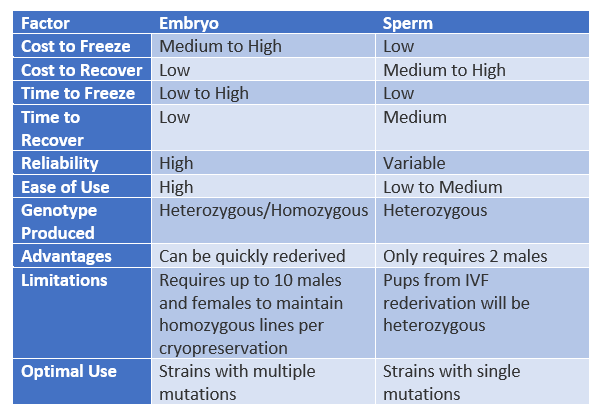
Cryopreservation offers powerful, long‑term protection for your valuable mouse lines. Key benefits include:
—Safeguards irreplaceable strains against unexpected loss or facility emergencies
—Prevents genetic drift, preserving the integrity of your research models over time
—Shields colonies from disease outbreaks and other health‑related disruptions
—Ensures continuity when breeding slows or stops
—Simplifies distribution by enabling shipment of frozen material instead of live animals
—Reduces housing and genotyping costs, freeing resources for active research
—Supports long‑term project planning, allowing you to archive lines until they’re needed
—Enables efficient colony management, minimizing overcrowding and unnecessary expansion
Cryopreservation is one of the most effective strategies for protecting your research investment while maintaining flexibility, reliability, and scientific rigor.
Assisted Reproduction Technologies
VGER streamlines the introduction of new transgenic mouse lines and the removal of pathogens from incoming colonies. We provide expert services—including in vitro fertilization, rederivation, and ovarian transplantation—to generate high‑quality, Specific Pathogen‑Free animals for your research program.
Importing cryopreserved sperm or embryos is permitted with prior approval from the Vanderbilt Department of Animal Care (DAC). To begin, the PI submits a TOPAZ animal order and, once approved, completes an iLab service request. This ensures proper protocol coverage, shipment tracking, and compliance.
VGER offers multiple rederivation options tailored to your needs, including IVF, frozen embryo cryorecovery, and fresh embryo rederivation for external lines, as well as IVF and line expansion for Vanderbilt‑maintained colonies. For homozygous or complex genotypes, embryo transfer‑based approaches are recommended to maximize success.
Rederivation outcomes depend on factors such as strain background, sample history, and cryopreservation methods used at the originating institution. While VGER applies rigorous standards and extensive experience to every project, specific recovery rates or genotypes cannot be guaranteed.
All shipping, handling, and cage costs for animals produced through this process are billed to the requesting PI.
Click to understand more about the options for the rederivation of mouse lines