To help you prepare for your new clinical responsibilities, all M2 students will start the year with FCC Launch Week, a week of clinically-driven content designed to better prepare students for success in their clerkships. During this pivotal week, you’ll enhance your practical clinical skills around the interface of laboratory-based medicine with patient care.
Clerkships
Your second year consists of six core clerkships, each lasting between four to eight weeks. From surgery to psychiatry and everywhere in between, these intensive clinical experiences introduce you to the broad range of medical care and help you identify where your specialty interests might lie.
Personalized Education through Master Clinical Teachers
Through the Master Clinical Teachers program, second-year medical students receive individualized time with expert clinicians every two to three weeks within each clinical rotation. MCTs will observe you work with a patient from start to finish, then provide you with immediate feedback on everything from accurate diagnosis to your professionalism. You’ll get a chance to ask questions, too. Share with your MCT what’s most difficult for you—anything from the history exam to hearing heart murmurs—and they’ll give you on-the-spot guidance in that area.
-
Meet our Master Clinical Teachers
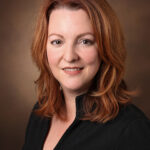 Raeanna Adams, MD, MBA, FACS – Surgery
Turn your textbook knowledge of the abdominal exam into practiced competence with expert surgeon Dr. Adams. Dr. Adams will train you to enter patient encounters with a detective’s eye for clues: what pieces of information and follow-up questions do you need in order to make a differential diagnosis?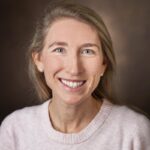
Rachel Apple, MD, MPH – Med-Peds
A VUSM ‘12 alumna, Dr. Apple brings dual expertise in internal medicine and pediatrics. She’ll teach you to use all five senses to take in context clues as soon as you enter the patient’s room. Learn to recognize key sights, sounds, and smells that will help you on your way to a differential diagnosis— even before you begin the history exam.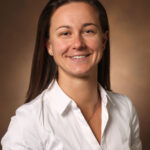 Catherine Burger, MD – Emergency Medicine
Dr. Burger focuses on the acute care phase of your medical training with special attention to efficient information gathering in the acutely ill patient as well as formulating safe diagnostic and therapeutic plans when the differential remains broad. She will also help finesse your patient and health-care team communication skills in clinical settings filled with urgency and uncertainty.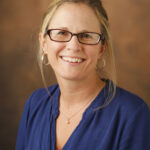
Christina Cain, MD – Obstetrics and Gynecology
Dr. Cain sees medical students as the mortar that holds the whole structure of patient care together in a teaching hospital, so your growth is her number one priority. Under her expert direction, your hands-on clinical skills will continue evolving towards excellence.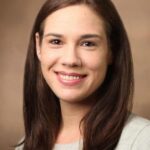
Angela Crudele, MD – Neurology
In the epilepsy clinic with Dr. Crudele, you’ll be seeing patients who aren’t currently presenting symptoms, making history your most effective tool. Expect lots of feedback on the physical exam along with pragmatic advice like redirecting patients and staying on time. Steven Eskind, MD – Surgery
For Dr. Eskind, the goal of an MCT session is not that you achieve a perfect diagnosis, but rather that you develop a rational thought process through the history and physical exams. With his direction, you’ll learn to generate a coherent line of questions and anticipate pertinent physical findings.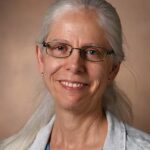 Cathy Fuchs, MD – Psychiatry
Dr. Fuchs (VUSM ‘82) is an expert in Psychiatry. As a consultation liaison psychiatrist, she focuses on the intersection between psychiatric and medical disorders. She will guide you through the mental status exam as a tool for assessment in all specialties of clinical work. Under her direction, you’ll grow in your observational skills and your understanding of both verbal and non-verbal communication patterns.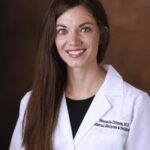
Merranda Holmes, MD – Meds-Peds Hospitalist
Drawing on her experience studying adverse childhood experiences and working with vulnerable populations, Dr. Holmes will help you grasp the importance of psychosocial barriers in helping patients achieve and maintain their desired health outcomes. What’s more, you’ll learn to think on your feet and adapt your differential diagnosis when a clinical case is not going quite as you expect.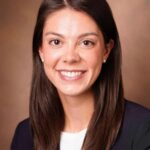 Carynn Koch, MD – Neurology
Dr. Koch’s approach to MCT sessions is focused on learning how to navigate a patient’s history, with strategic questioning and conversational ease. In neurology, patients often don’t have a clear recollection of events and these encounters can feel challenging. Together, you will become equipped to compassionately and efficiently obtain that thorough but focused H&P!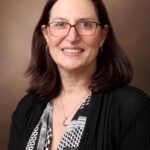 Sandi Moutsios, MD – Med-Peds
Dr. Moutsios is a primary care doctor with 25 years of experience coaching residents, who has additional formal training in communication skills and coaching, and is excited to help all learners work on specific skills that they want to be even better at to get to mastery-level clinical skills. Anuj Patel, MD – Inpatient Pediatrics
Dr. Patel’s top priority for MCT sessions is developing your clinical reasoning skills— learning the “why” behind each clinical decision and diagnosis. He will help develop your history taking and exam skills to “put it altogether,” in order to treat a variety of patients.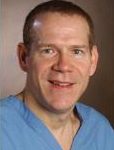 Charles Rush, MD – Obstetrics and Gynecology
No matter how anxious you feel about working with patients, Dr. Rush’s encouraging teaching style will make you feel right at home. Together, you’ll work on critical listening skills, so you can go beyond the patient’s spoken words to understand how they’re really feeling.Kurt Smith, MD FACEP – Emergency Medicine
You’ve mastered the medical jargon; now learn from Dr. Smith how to translate clearly and concisely back to the patient in crisis situations. Dr. Smith’s student-centered teaching style will help you identify your own strengths and weaknesses, both as a clinician and as a communicator.Katharine Sourbeer, MD – Neurology
As a neurologist, Dr. Sourbeer has seen in practice how important the neuro exam can be to a diagnosis. She knows it can be a daunting exam and looks forward to helping you finesse your skills for this important exam and to use the data you gather both on the exam and history to think through a prioritized differential diagnosis.Lauren Starnes, MD – Pediatrics Hospitalist
As a pediatric hospitalist, Dr. Starnes (VUSM ’19) brings her expertise in caring for and communicating with children and their families in the inpatient setting. Together, you’ll work on synthesizing your history and physical exam findings, refining your assessments, and building confidence in your clinical skills in pediatrics.Chase Webber, DO FACP- Hospital Medicine
Dr. Webber believes that every patient encounter is a learning opportunity and that the Immersion Phase is where critical thinking meets diagnostic excellence. He challenges learners to apply curiosity, communication, and clinical reasoning principles (both new and old) to their sessions and will guide students to use every tool in reach (including AI) to inform the humanistic care of patients.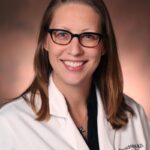 Kate Wooldridge, MD, MPH – Hospital Medicine
Dr. Wooldridge is excited to share her expertise in acute care medicine during MCT sessions. Her goal is to encourage and foster students to take the information that they gather from patients and delve deeper into the “why” behind the diagnostic and therapeutic options they might consider. Using a reflective approach and encouraging data-driven decision-making, Dr. Wooldridge hopes her students will leave her sessions excited and confident in their ability to integrate evidence based practices into their clinical reasoning.
Foundations of Physician Responsibility
Foundations of Physician Responsibility 2 (FPR2) builds on concepts introduced in your first year, carrying forward the four core responsibilities—Patient Care, Self Development, Team Collaboration, Systems Engagement—and integrating threads of Healthcare for All and Biomedical & Health Informatics—into the Foundations of Clinical Care (FCC) phase. Through a combination of interactive small group learning, didactic sessions, Center for Experiential Learning and Assessment (CELA) simulations, and in-depth discussion with your College Mentor, FPR 2 helps students relate their clinical clerkship experiences to these key concepts.
Research: “Discovery” Course
The second milestone on the research path takes a deep dive into the resources and community of the top-tier research campus surrounding you. In Year 2’s Discovery course, you’ll explore the amazing variety of research going on at Vanderbilt, meet with potential research mentors, and select a research project that best fits your own interests.
Most medical students select a project from one of the four following areas:
- Bench2Bedside (B2B): From traditional lab research to translational cell culture investigations, B2B research takes you on an unforgettable journey into lab-based biomedical research. If drug development, computational research, or first-in-human studies spark your interest, B2B could be right for you.
- Community and Global Health: If you’re passionate about improving population health, consider a research project in community and global health. From barriers to treatment for underserved populations in America to transnational health issues, community and global health research is all about addressing the health care needs of specific populations, both here in Nashville and around the world.
- Epidemiology and Informatics: A cornerstone of public health, epidemiology research informs policy decisions and evidence-based practice by identifying risk factors for disease and targets for preventive health care. Meanwhile, biomedical informatics helps clinicians store, retrieve, and analyze data to improve the quality of care for patients on an everyday basis. If strengthening evidence-based practice or bolstering public health appeals to you, this research area might be the right fit for you.
- Ethics, Education, Policy, and Society (E2PS): Want to dive into the ethical and social dimensions of medicine? The E2PS research area encompasses historical inquiry of medicine, patient accounts of illness, legal aspects of health policy, ethics of genomics, and so much more. The medical humanities come to the forefront here, as biomedical research connects with philosophy, anthropology, sociology, and law.
Think you might be interested in longer-term research? Check out our Medical Scholars Program, which gives you full funding to turn your selected project into a year of uninterrupted biomedical research.
Success in Year 2
Clerkships are foundational to everything else you’ll learn in clinic afterwards, so a competency-based assessment system allows you to see exactly where your strengths and areas for growth lie.
Throughout your M2 year, you’ll get a sense of how you’re doing through:
- Milestone-based assessments from residents and attending faculty
- Narrative feedback from your peers and clinical teams
- Clerkship shelf exams at the end of each clerkship
- End of the Year OSCE event at the end of M2: At this week-long event, you’ll be exposed to clinical scenarios in CELA touching on Vital Experiences and representing your experiential learning from all of the clerkships. Carefully simulated with standardized patients, you’ll receive immediate feedback from faculty evaluating your performance and capabilities. This event is just one step in preparing you to move into the Immersion Phase, helping you identify your clinical strengths and areas for growth.
Throughout it all, your portfolio coach will be there to walk with you through feedback from various sources and set timely goals for personal growth.